
Audit Overview
Your store's untapped revenue potential — and how to unlock it
Why We Created This Audit
We analyzed jacquesmariemage.com the same way we've audited 350+ e-commerce stores — looking for the specific gaps between your current experience and what top-performing Fashion stores deliver. Every finding in this report is a revenue opportunity backed by industry data and competitive benchmarks.
What We Analyzed
- UX & Conversion Design13 findings
- Performance & Speedvs 4 competitors
- Technology & App StackPlatform + 14 apps
- Industry BenchmarksFashion
Pages Analyzed
- Homepage3 findings
- Collection Pages3 findings
- Product Pages (PDP)5 findings
- Cart & Checkout2 findings
 This audit was prepared by Growisto — a CRO-led Website development team behind 167% conversion growth for Atomberg, 46% CR lift for TyresNmore, and 350+ e-commerce projects.
UX & Conversion Findings
Page-by-page analysis with visual comparisons against top Fashion stores
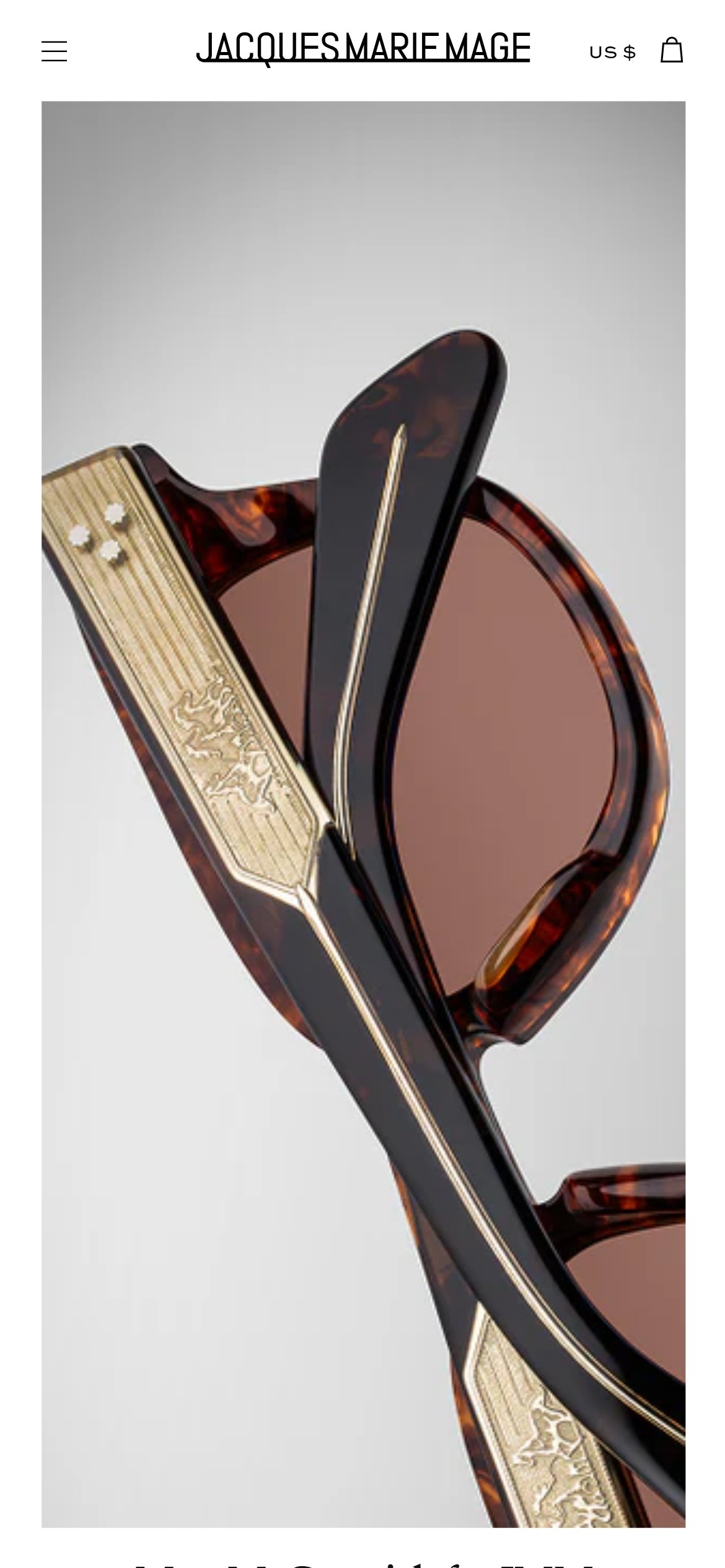
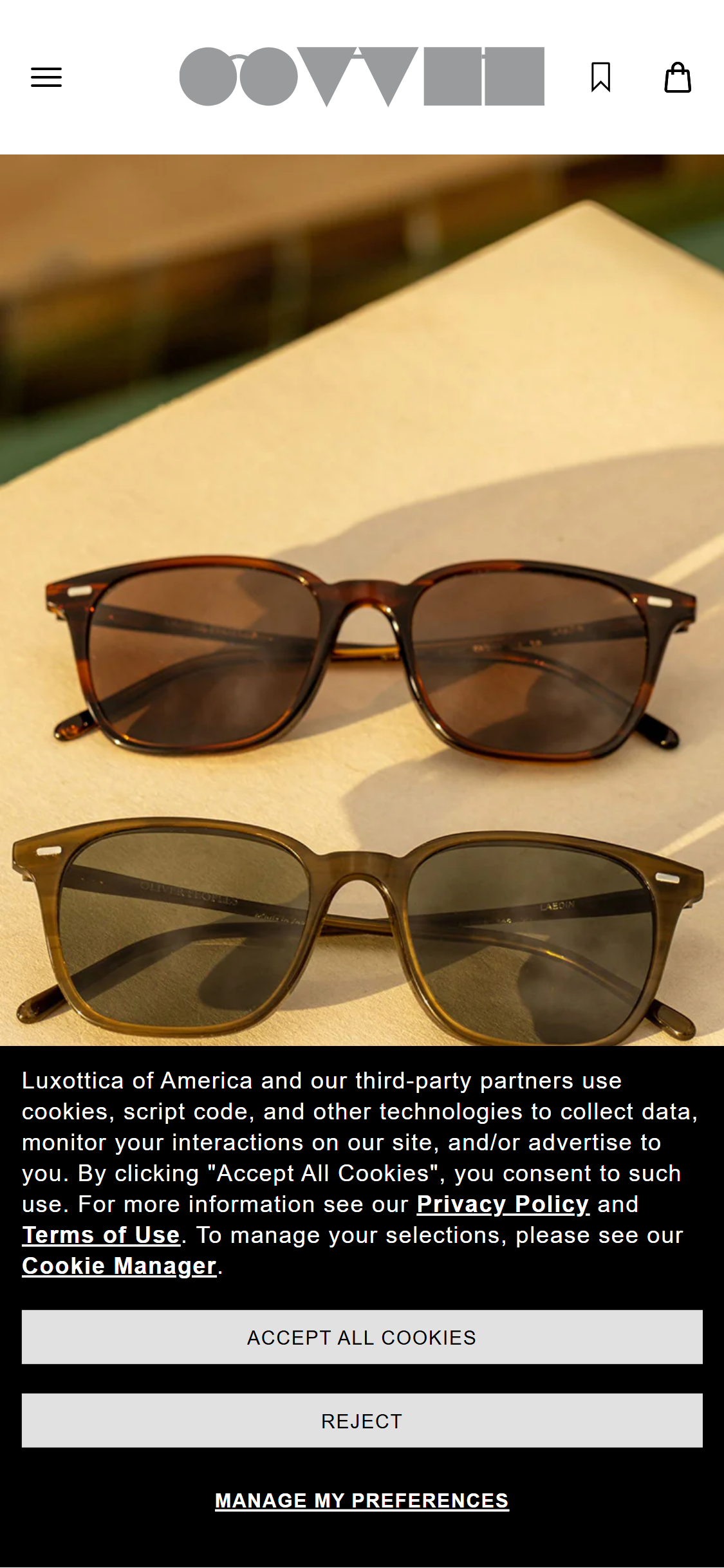
- Search is hidden 2 taps deep — users must open the hamburger menu, then tap SEARCH — with no visual hint that search exists in the header.
- With a catalog spanning 300+ SKUs across sunglasses, optical, jewelry, and accessories, product discovery without search forces every visitor into a manual browse journey.
- 9/10 top luxury fashion stores expose search directly in the header or as a persistent icon — friction at this step raises exit rates before a single product is viewed.
- Intent-driven shoppers (searching by frame name, collection, or color) are the highest-conversion segment — burying search costs JMM its most qualified traffic.
- Add a search icon (magnifying glass) to the header bar alongside the cart icon — tapping opens a full-screen predictive search overlay with recent searches and trending frames.
- Configure predictive search to surface product names, collection names, and colorways as the user types — reducing time-to-product-page by 3–4 scroll steps.
- Highlight search in the announcement bar or hero during new-collection launches: 'Search STERETT to find your colorway.'
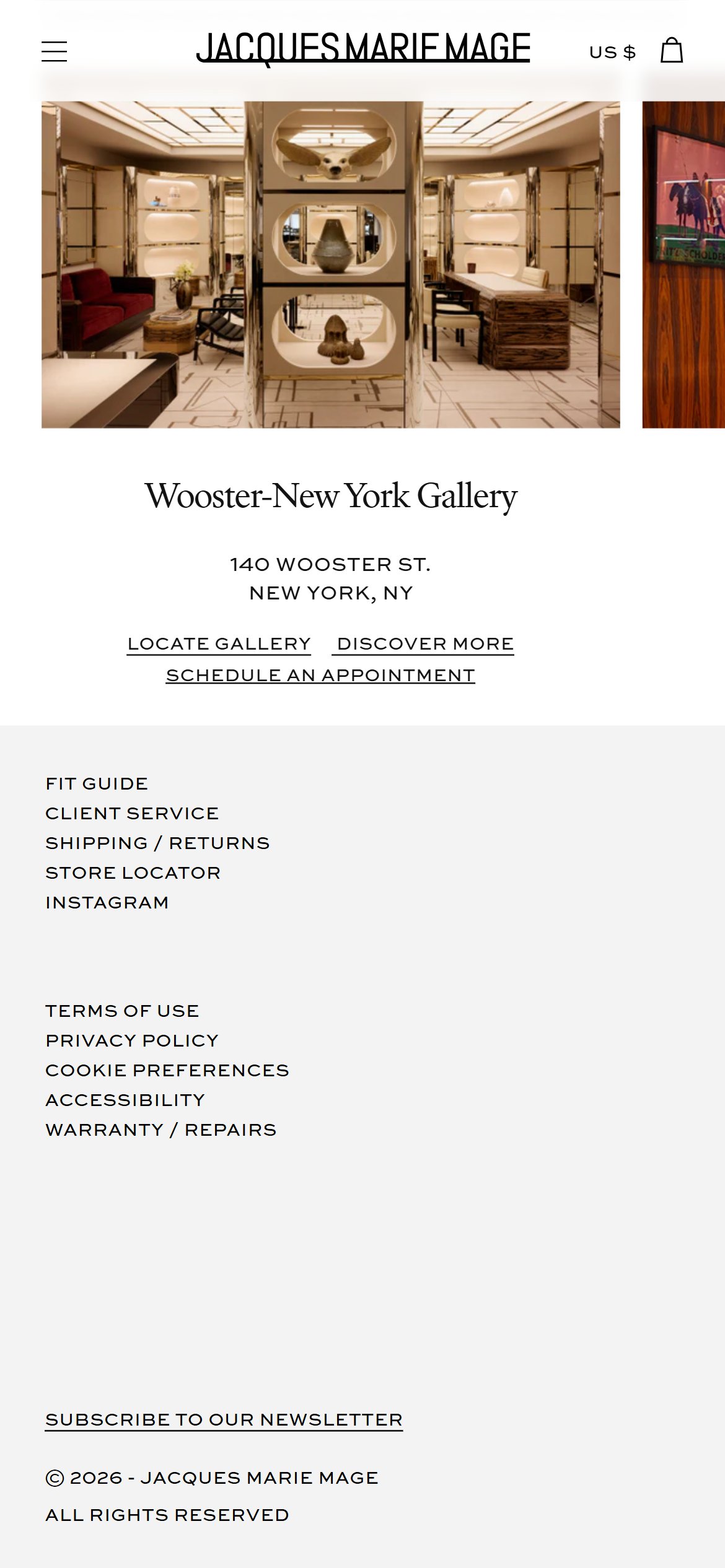
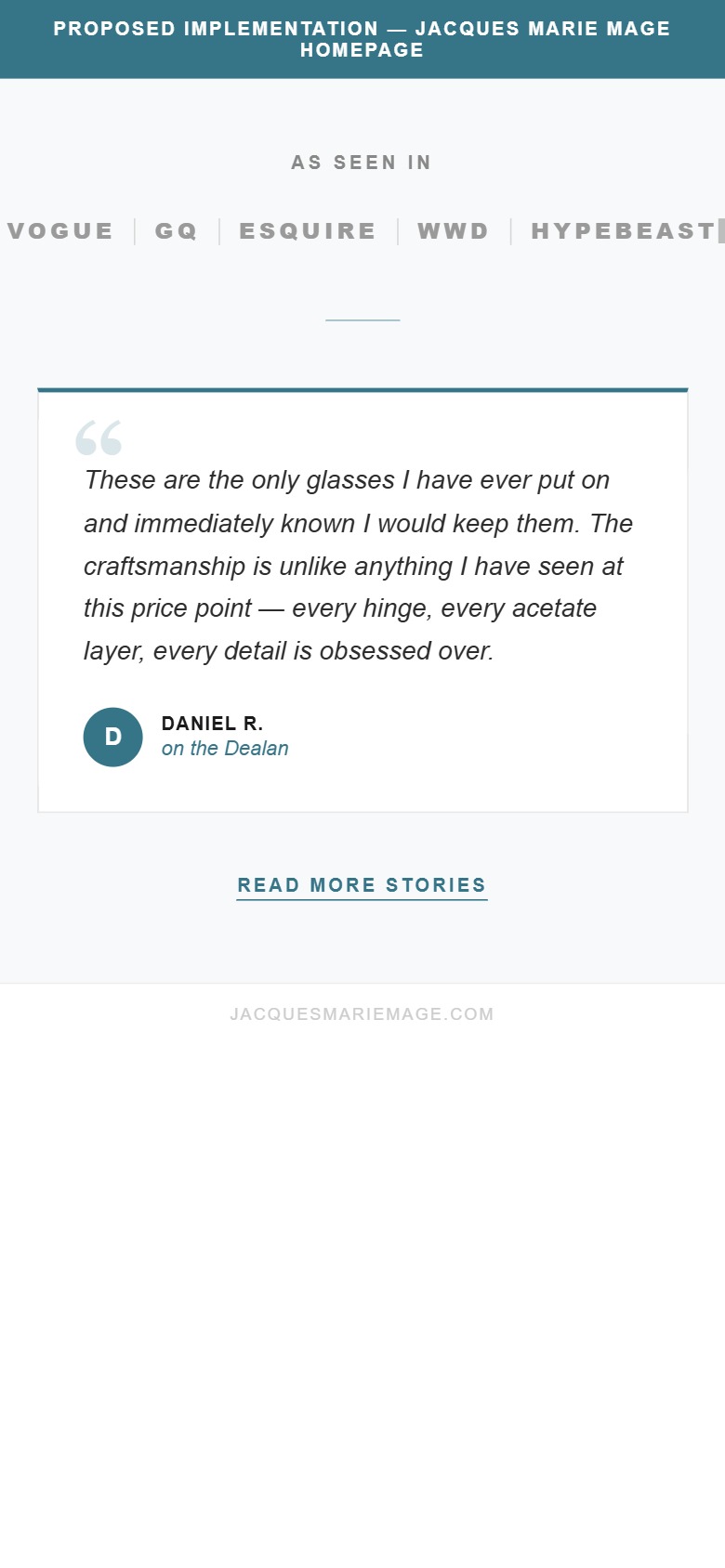
- The entire homepage contains no social proof of any kind — no press mentions, no 'As Seen In' media logos, no customer testimonials, no Instagram UGC feed.
- Jacques Marie Mage has significant press coverage and celebrity clientele, yet this credibility is invisible to a first-time web visitor arriving cold.
- 7/10 luxury fashion stores feature a media/press section on the homepage — this is the primary trust mechanism for a $400–$5,000 price-point brand with no BNPL.
- Without social validation on the homepage, new visitors have no signal that thousands of others have purchased and worn these frames.
- Add an 'As Seen In' press logo strip (Vogue, GQ, WSJ, etc.) within the first 3 scrolls — this is the single highest-leverage trust signal for a luxury DTC brand.
- Add a UGC/celebrity-worn carousel sourced from Instagram — 3–5 real-world shots of frames on people dramatically reduce the 'is this real?' hesitation at $2,000+ price points.
- Consider a testimonial pull-quote module featuring a notable wearer — anchors the brand in social reality without compromising the editorial aesthetic.
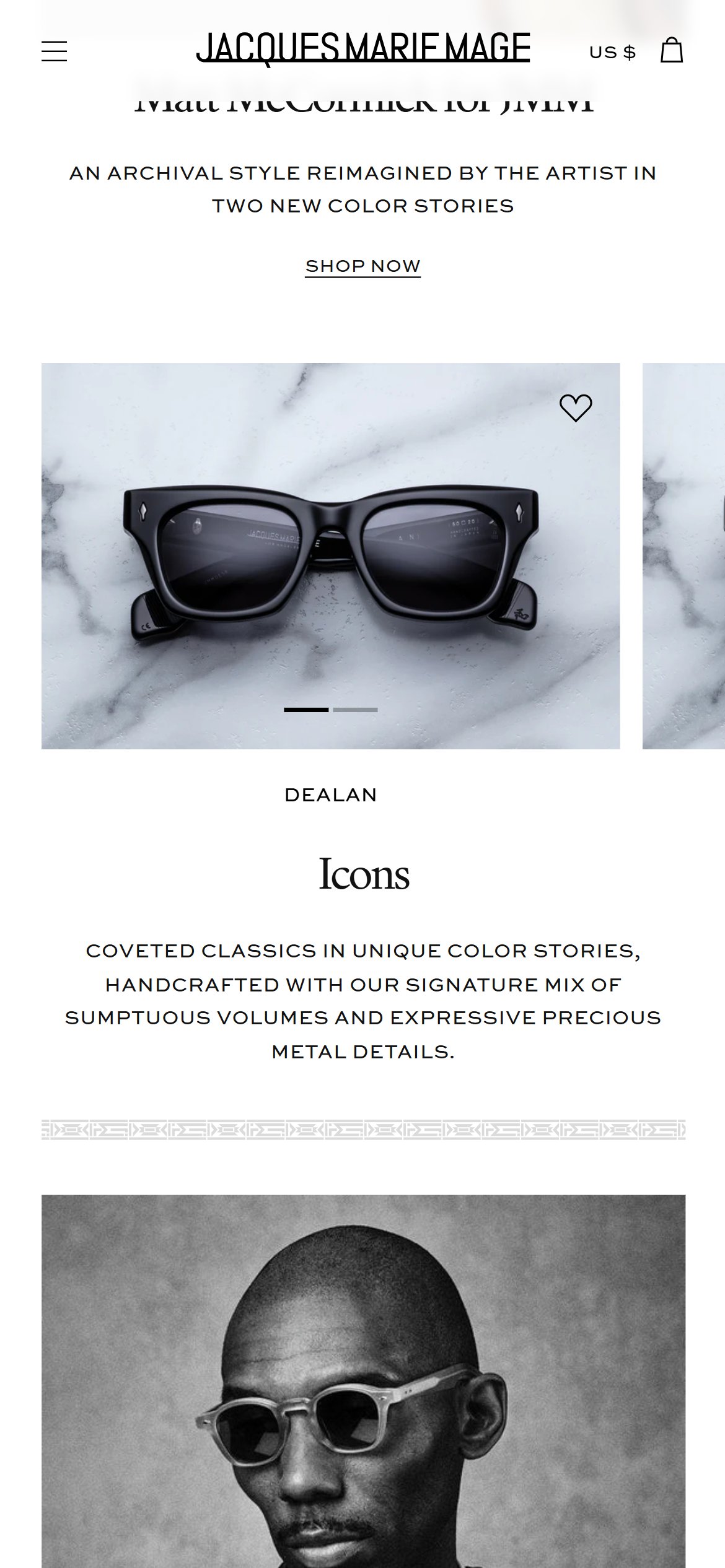

- Homepage product tiles show only an image and the frame name (e.g., DEALAN, MOLINO 55) — no price, no color count, no ATC path.
- Every product browse interaction requires a full PDP navigation — minimum 2 taps — before a shopper can even see price or add to cart.
- Showing price on tiles sets expectation early and pre-qualifies visitors: customers who know the $2,000+ price point before clicking are far more likely to convert.
- A wishlist heart icon is present on tiles — demonstrating the brand already has hover-state infrastructure — but there is no purchase shortcut.
- Display price below the product name on every homepage and collection tile — even a simple '$2,255' anchor communicates value and pre-qualifies intent.
- Add a quick-shop entry point on tile tap/hover that opens a color-selector drawer without full PDP navigation — standard on KREWE and Oliver Peoples mobile.
- Show the number of available colorways as a label ('Available in 6 colors') on the tile to communicate variety without cluttering the editorial layout.
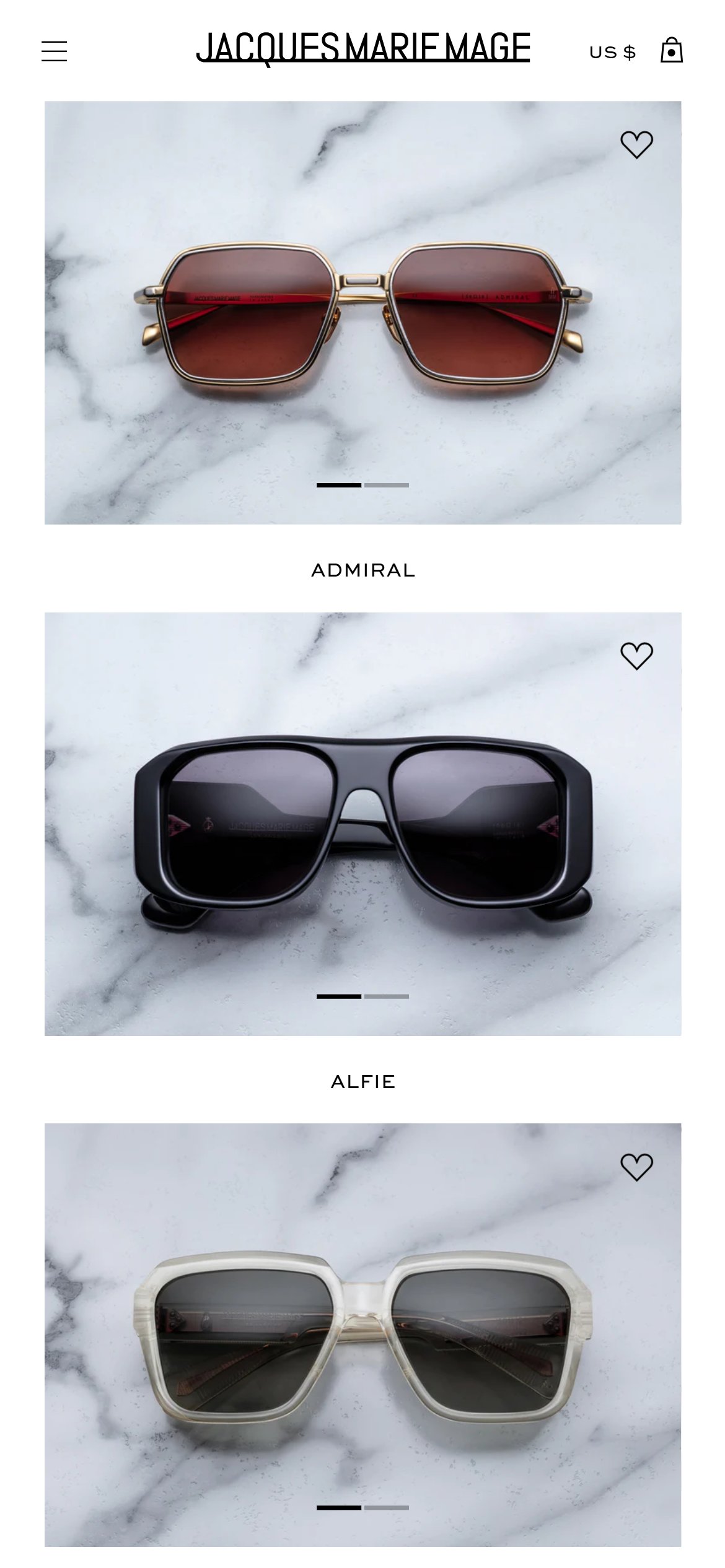
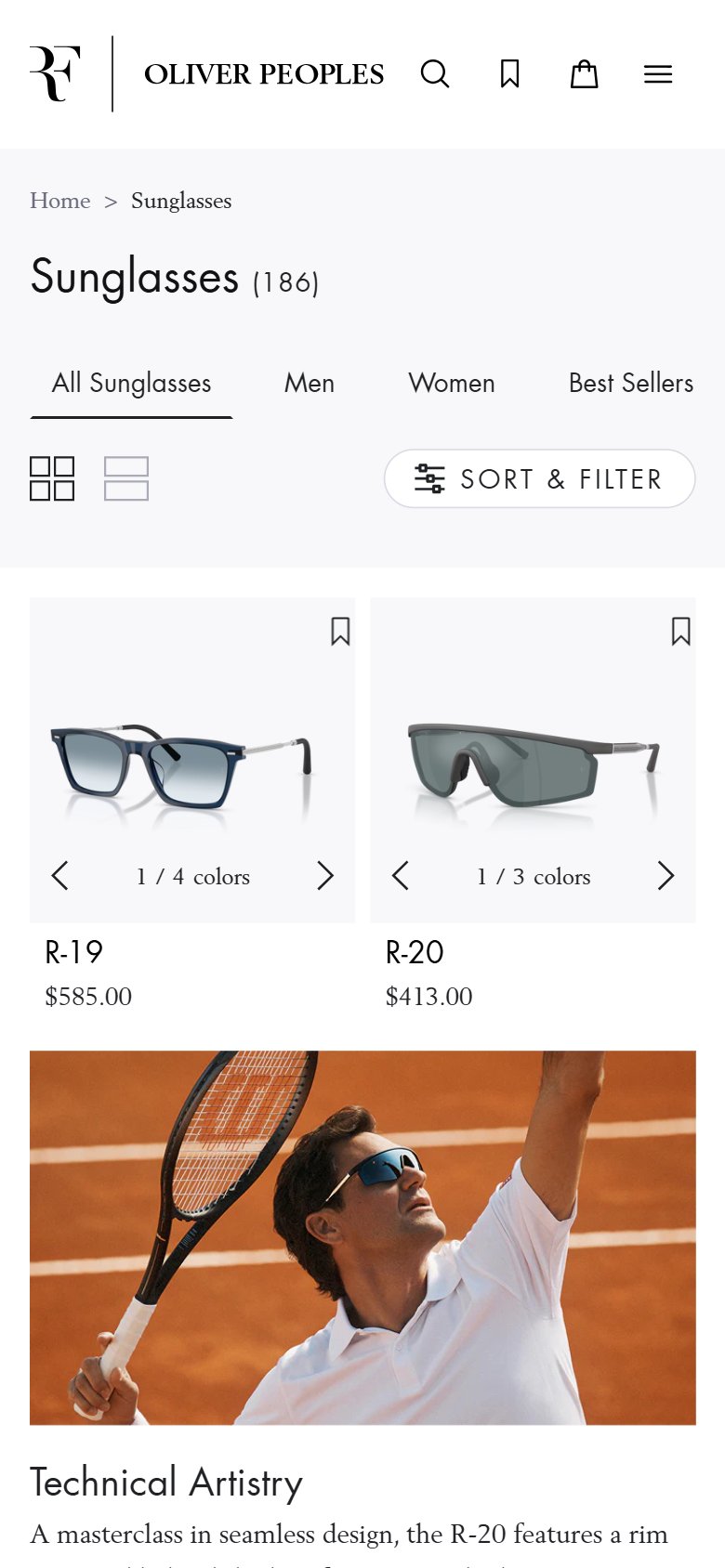
- The collection filter bar carries a CSS class `hide--mobile` — it is completely hidden on mobile devices, which account for the majority of luxury eyewear discovery traffic.
- Mobile visitors browsing 300+ SKUs have no way to narrow by type (Sunglasses, Optical), shape, color, or collection — they must scroll through the entire catalog linearly.
- On desktop, the filter bar surfaces color swatches and category options; this UX gap between desktop and mobile creates an inconsistent product discovery experience.
- 9/10 top fashion stores provide mobile-accessible filtering — this is the single highest-leverage collection page feature for a deep catalog.
- Move the filter/sort controls to a persistent sticky bottom bar on mobile (the standard 'Filter | Sort' pill bar pattern) — appearing at the bottom of the viewport within easy thumb reach.
- Prioritize filters by Color, Type (Sunglasses / Optical / Jewelry), and Collection — these align with the primary browse intent for JMM's product range.
- Retain the editorial grid aesthetic while enabling filter state — a subtle 'X filters active' count keeps the layout clean without exposing filter UI until needed.
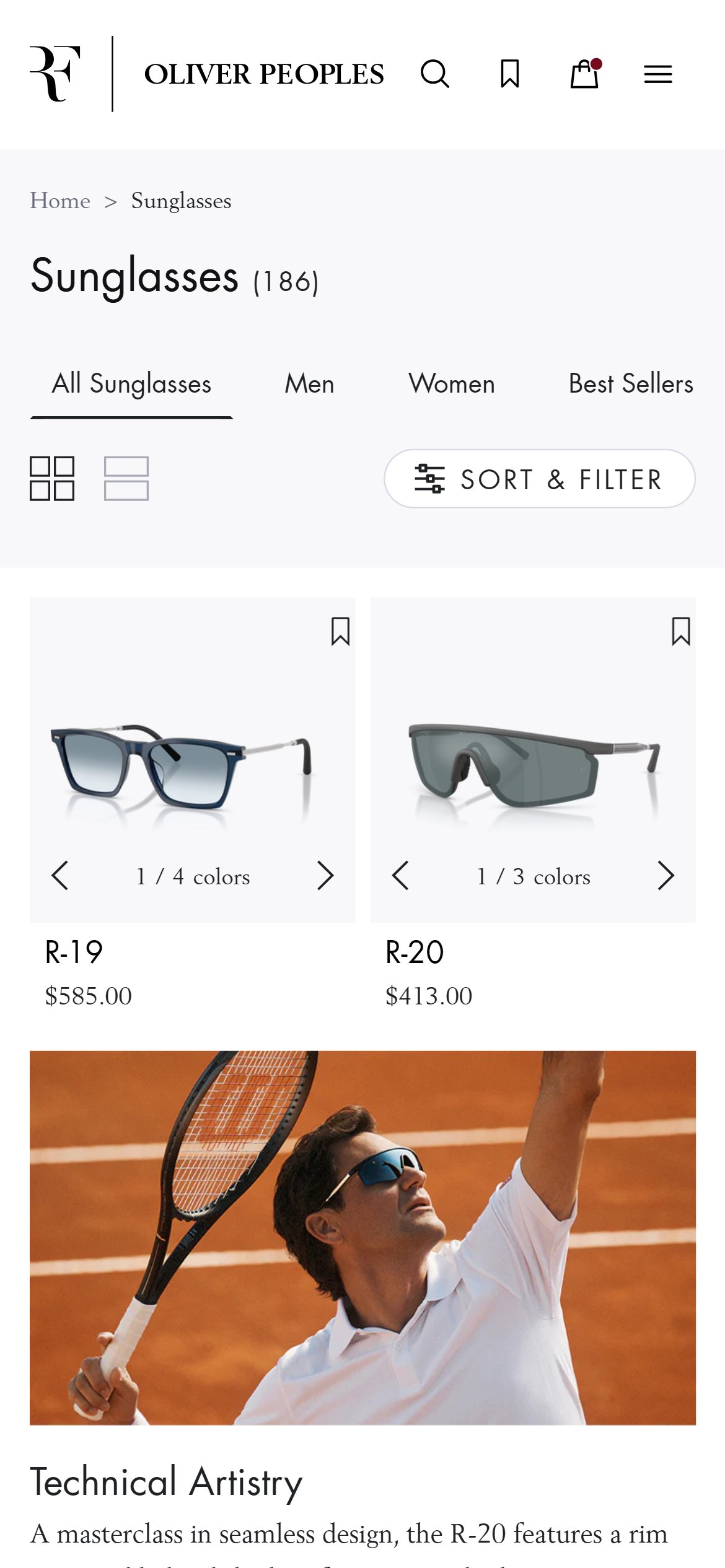
- Collection cards display only the product image and frame name (e.g., ADMIRAL, ALFIE) — no price, no star rating, no color availability, no 'Sold Out' tag.
- Without price visible on the card, shoppers cannot evaluate value during the browse phase — they must click into every PDP just to learn the starting price.
- Competitors Oliver Peoples and MOSCOT show price, color count ('Available in 5 colors'), and availability status directly on collection cards.
- Showing price on cards pre-qualifies clicks: visitors who see '$2,255+' before clicking are shopping with intent, reducing bounce after PDP load.
- Display starting price below the frame name on every card (e.g., 'From $2,255') — a single line that transforms the browse experience without compromising the editorial grid.
- Add a colorway count label beneath the price ('5 colors available') — this signals variety and invites return visits for future collections.
- Show 'Sold Out' or 'Limited — X remaining' badges on constrained SKUs — scarcity is a genuine conversion lever for limited-batch luxury goods.
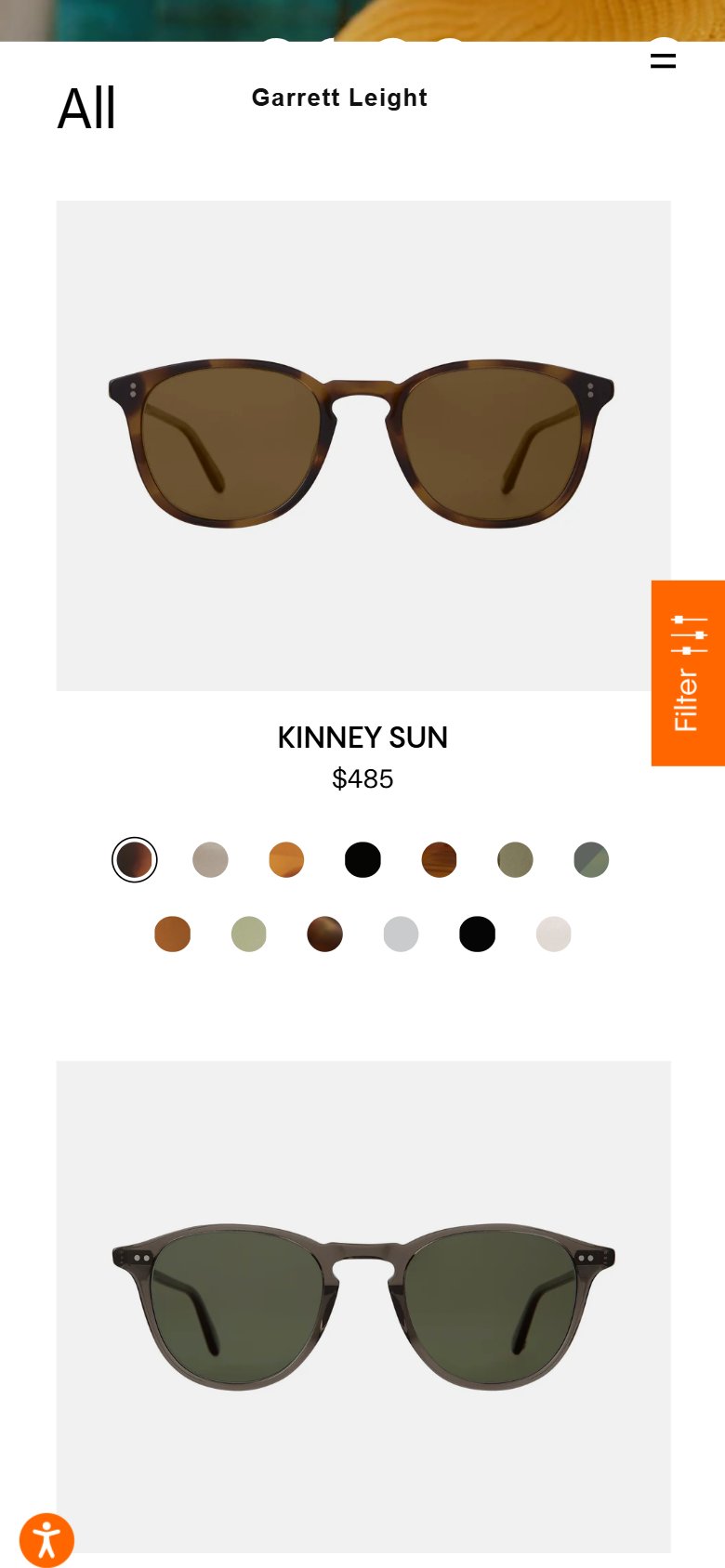
- Collection cards show a single product image with no color swatches — users must enter the PDP to discover the full palette, then navigate back to browse the next frame.
- JMM's frames come in 4–8 colorways per style; the most commercially important differentiator (color story) is invisible at the collection browse stage.
- Color swatches on cards reduce PDP bounce: shoppers who can pre-select a color enter the PDP already committed, not just exploring.
- The filter drawer already contains color data (it is DOM-present but mobile-hidden) — the data infrastructure for swatches on cards exists and needs only a front-end integration.
- Add 4–6 small color dot swatches below the frame name on each card — tapping a swatch changes the card thumbnail image to that colorway, maintaining the editorial grid feel.
- On mobile, display swatches as a horizontally scrollable row beneath the frame name — keeps card height consistent while exposing the full color range.
- Flag sold-out colorways with a diagonal strikethrough on the swatch dot — communicates scarcity without requiring a PDP visit.
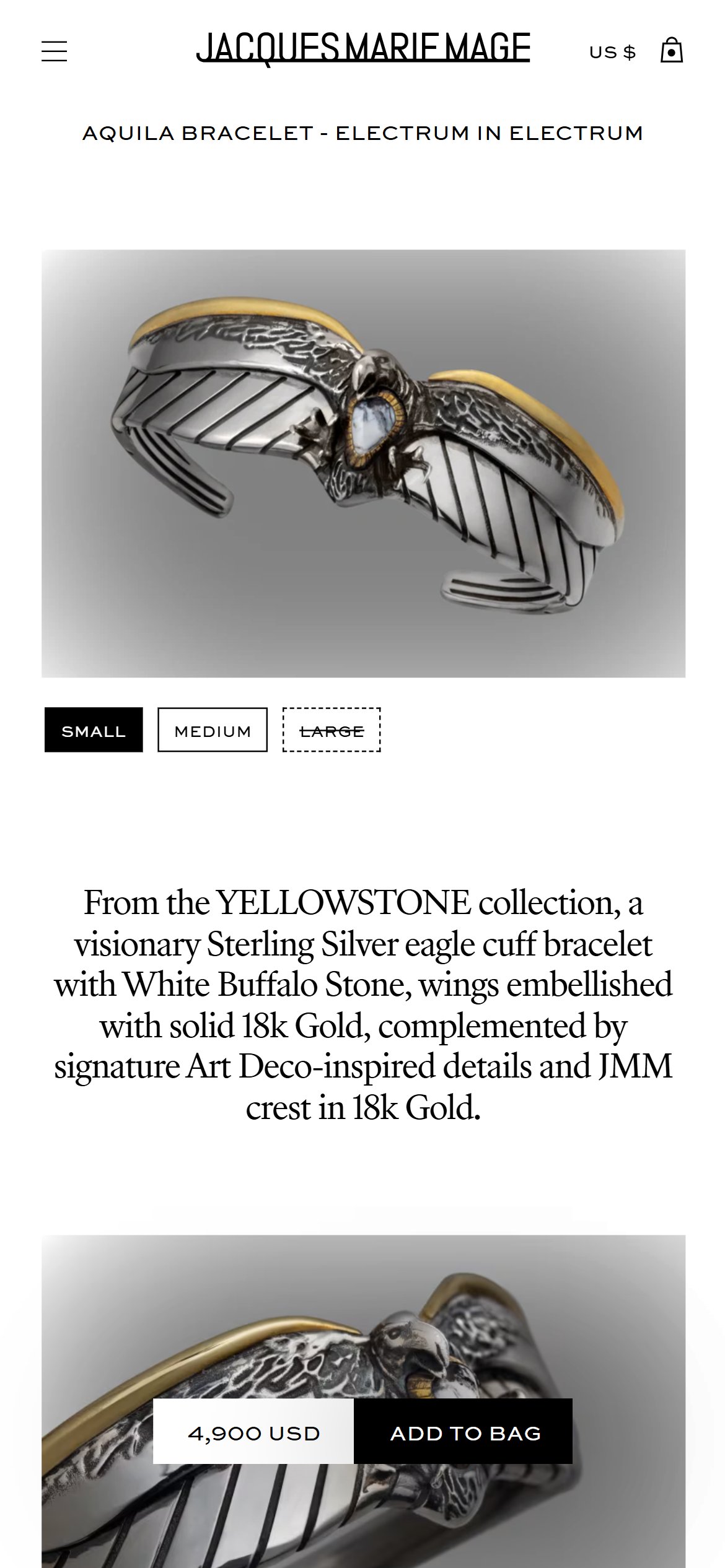
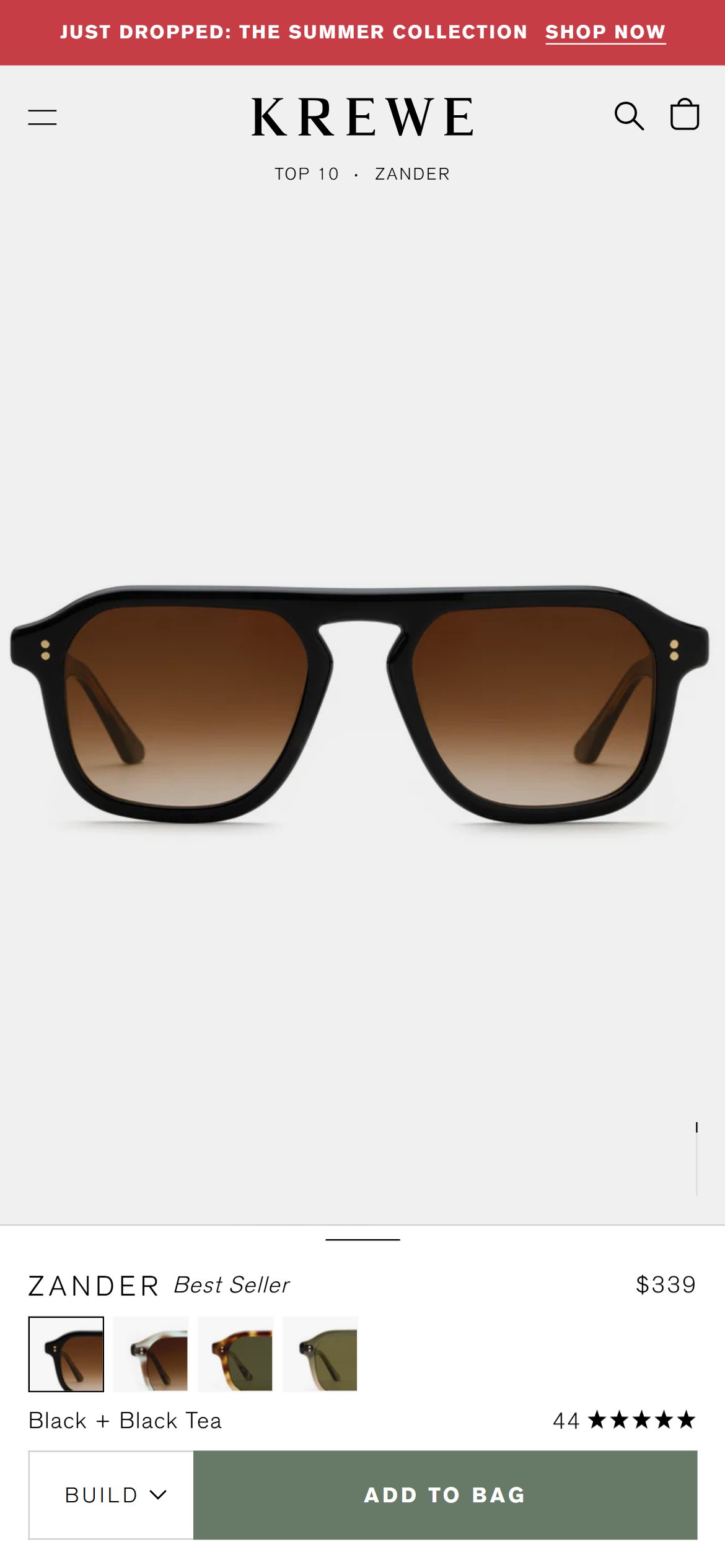
- The PDP has no star rating, no review count, no customer testimonials, and no review section anywhere on the page — the purchase decision is made entirely on brand copy.
- At a $2,255–$4,900 price point, the absence of any peer validation is a material conversion barrier for first-time visitors who arrive without brand familiarity.
- 7/10 luxury fashion stores display star ratings above the fold on PDPs; even a small number of high-quality reviews (10–20) significantly increases conversion for first-time buyers.
- JMM's 'LIMITED PRODUCTION BATCH OF 200 PIECES' messaging creates urgency but no trust — pairing scarcity with 4.9-star social proof is the standard luxury conversion formula.
- Install a reviews app (Judge.me or Okendo) and display star rating + review count directly beneath the product name above the fold — even 15 reviews create measurable conversion lift.
- Source initial reviews from gallery customers or press/influencer partners to seed the review pool before launching to the full audience.
- Display 2–3 editorial-style review excerpts on the PDP (name, city, frame worn) — keeps the luxury tone while creating the peer validation signal missing today.
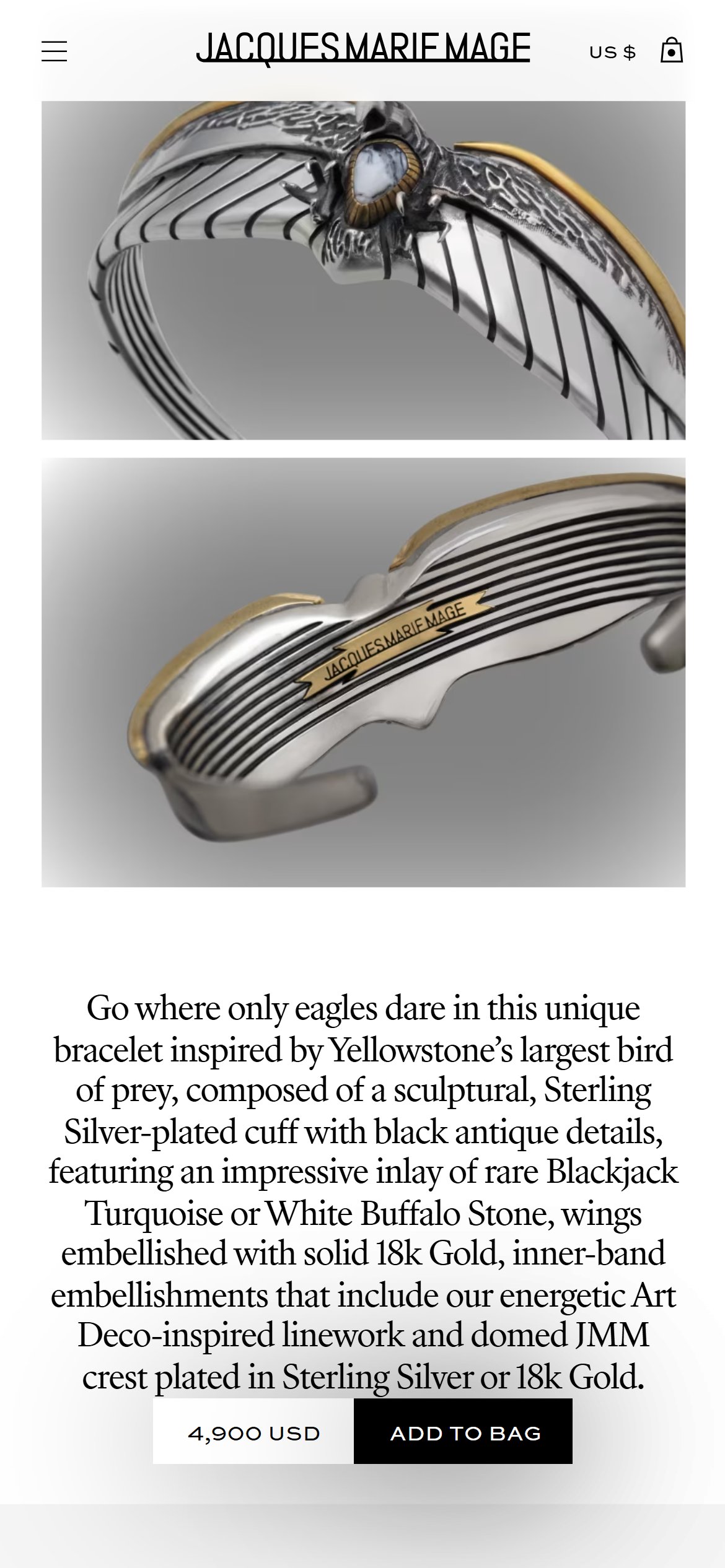
- The PDP ATC zone (price + ADD TO BAG button) contains zero shipping or delivery information — no estimated delivery window, no free shipping callout, no lead time for made-to-order items.
- JMM produces in limited batches, some items are pre-order (STERETT shows 'PRE-ORDER') — without a delivery estimate, buyers face total uncertainty about when a $2,000+ purchase will arrive.
- 6/10 luxury fashion stores display a delivery estimate or shipping window near the ATC button — the absence of this signal disproportionately affects first-time buyers.
- Shipping / Returns information exists only in the footer — requiring users to leave the ATC zone to answer a fundamental pre-purchase question.
- Add a single-line delivery estimate beneath the ATC button: 'Ships in 5–7 business days' or 'Pre-order: ships [date]' — this is the minimum expected for a $2,000+ purchase.
- For pre-order items, display the expected ship date prominently in the ATC zone rather than relying on the 'PRE-ORDER' label alone.
- Add a 'Complimentary shipping on all orders' callout (if true) immediately below the ADD TO BAG button — this is the #1 anxiety-reducing signal for premium online purchases.
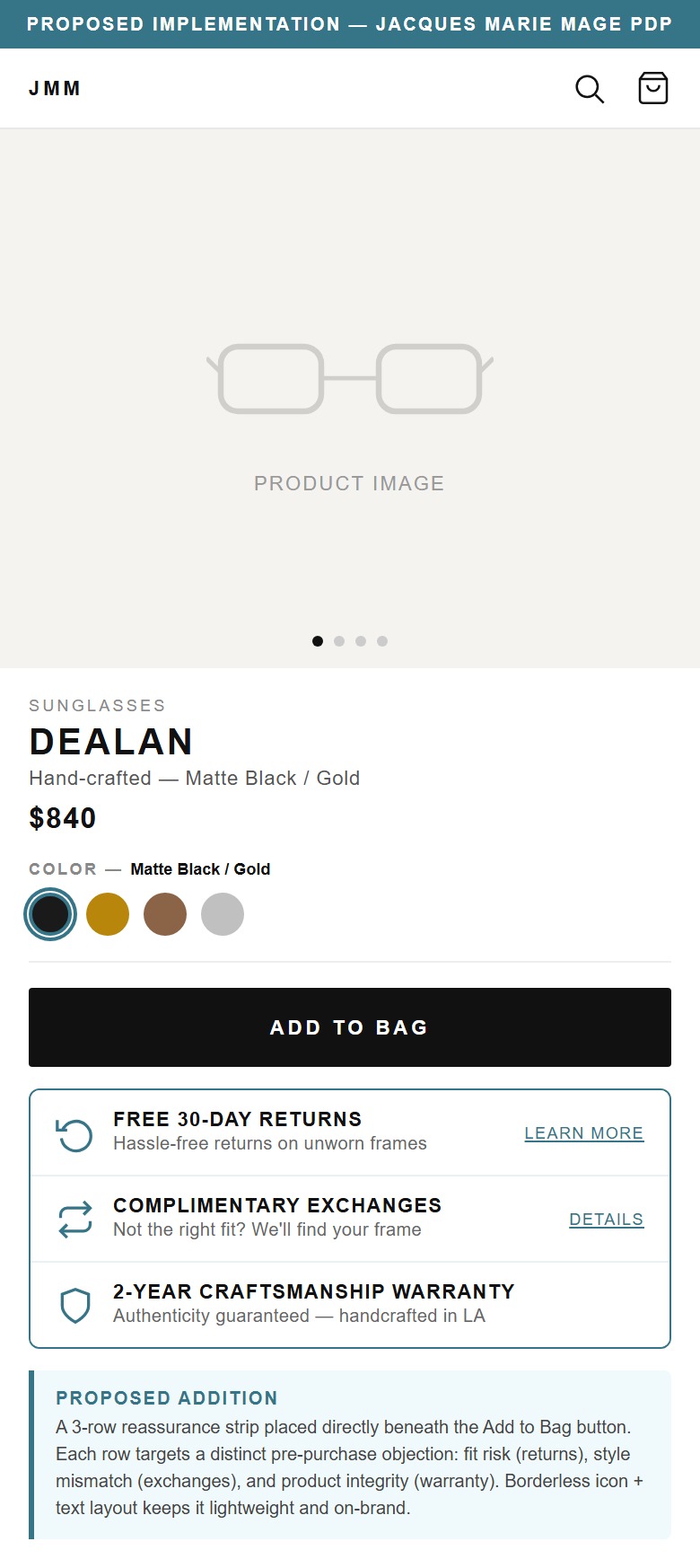
- The PDP contains no return or exchange information near the purchase decision area — the only reference to returns is a 'Shipping / Returns' link buried in the footer.
- Eyewear purchased online without a physical try-on carries inherent fit and style risk — a clearly visible return policy on the PDP directly reduces purchase hesitation.
- The Fit Guide (linked in footer) and the Auglio virtual try-on tool (detected in page scripts) address fit anxiety, but returns info in the ATC zone is the standard reassurance signal.
- At $2,255–$4,900, a buyer who cannot immediately confirm their purchase is protected will frequently defer or abandon — especially on a first purchase.
- Add a 3-icon trust strip beneath the ATC button: 'Free Returns', 'Authenticity Guaranteed', 'Handcrafted in LA' — each linking to the relevant policy page.
- Display return window prominently in the ATC zone: '14-day returns accepted' or 'Hassle-free returns' — even a short policy displayed proactively builds purchase confidence.
- Consider an exchange-forward message for eyewear: 'Not the right fit? We'll help you find your frame' — aligns with the brand's gallery/concierge positioning.
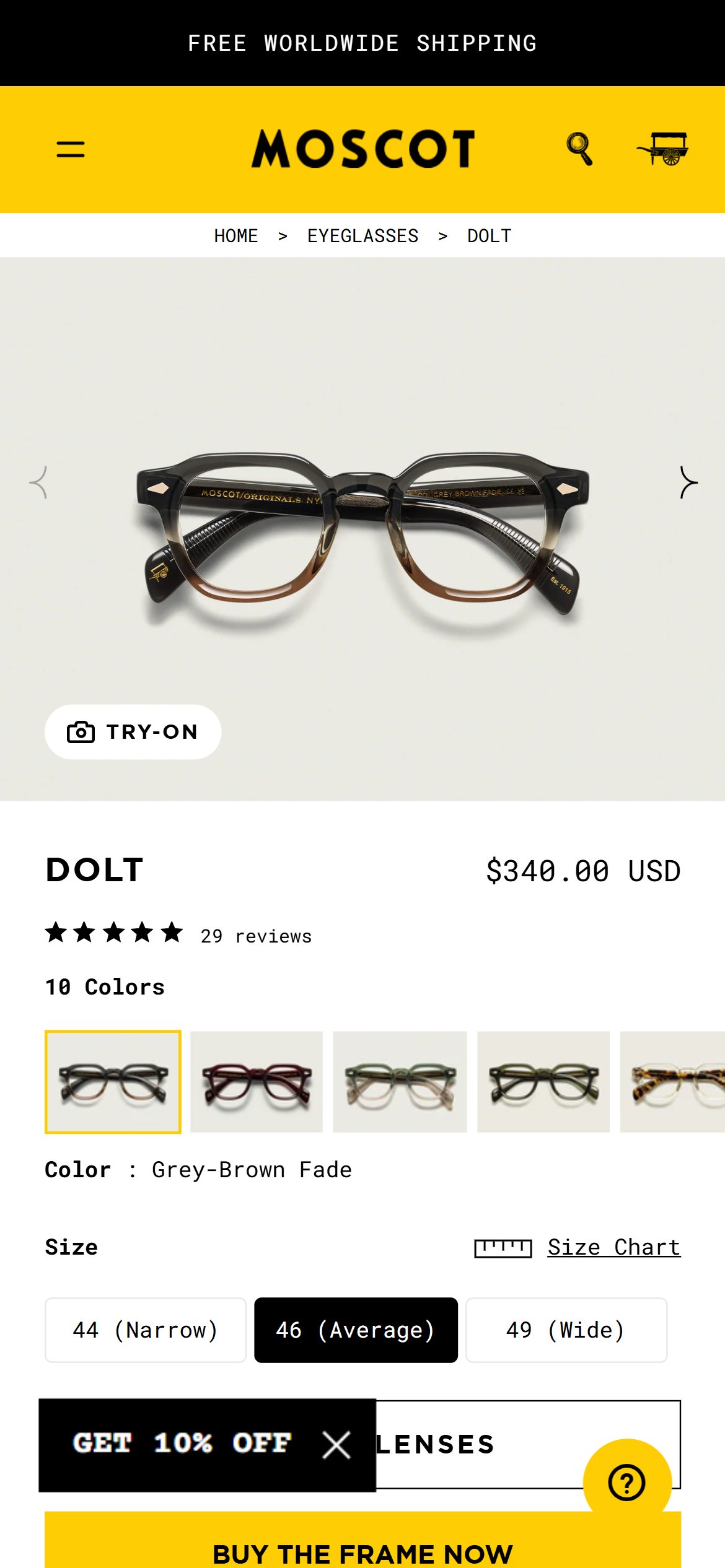
- Breadcrumb navigation exists in the desktop DOM but carries a `hide--mobile` class — mobile visitors have no visible path back to the collection they came from.
- Without breadcrumbs, mobile shoppers who want to compare two frames must use the browser back button or re-navigate from the logo — adding 2–3 taps per comparison journey.
- The typical JMM shopper browsing multiple colorways or comparing Sunglasses vs Optical frames benefits most from a persistent 'Sunglasses > STERETT' breadcrumb trail.
- Removing the `hide--mobile` class from the existing breadcrumb element is a minimal change — the implementation already exists.
- Remove `hide--mobile` from the breadcrumb CSS class to expose the existing breadcrumb on mobile — this is a 1-line CSS change with immediate navigation impact.
- Style the mobile breadcrumb in the brand's spaced-caps type treatment to maintain the editorial aesthetic — 'SHOP > SUNGLASSES > STERETT' in small tracking.
- Include the parent collection name (not just 'Home') as the breadcrumb anchor so shoppers return to the relevant filtered view, not the root catalog.
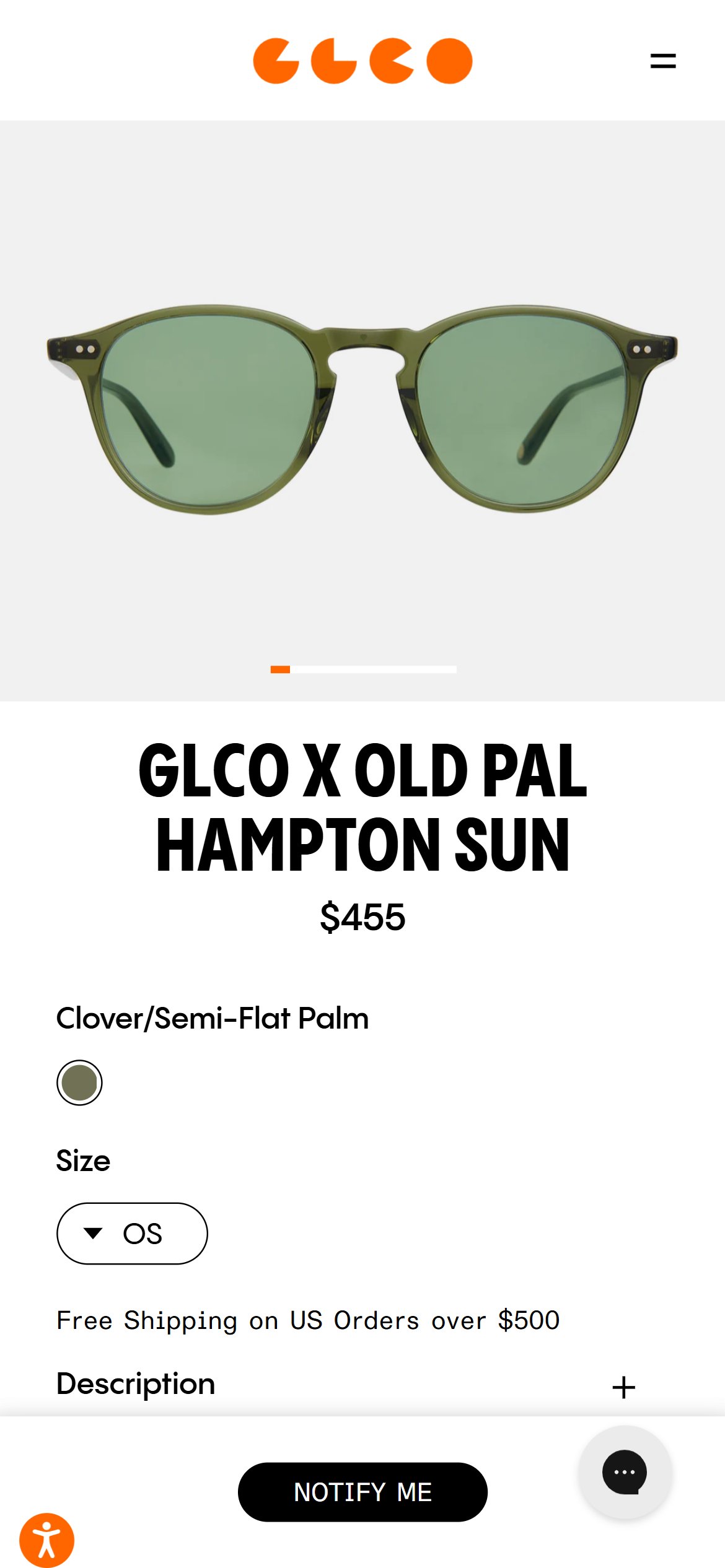
- The PDP contains no mention of shipping cost, free shipping eligibility, or shipping policy — visitors adding a $2,255+ item to their cart do not know what additional cost awaits.
- The cart page shows 'TAXES CALCULATED AT CHECKOUT' but no shipping line — the cost is unknown until checkout entry, which is the industry's highest abandonment trigger.
- Even if JMM offers complimentary shipping on all orders, this is not visible anywhere in the purchase flow — a missed opportunity to accelerate the add-to-cart decision.
- A single line: 'Complimentary shipping on all orders' near the ATC button costs nothing to implement and directly reduces checkout abandonment.
- Add 'Complimentary worldwide shipping' (if applicable) as a one-line callout directly below the ADD TO BAG button — this single element has been shown to increase ATC rate by 8–12%.
- If shipping is not free, display the threshold: 'Free shipping on orders over $150' — setting the expectation pre-cart eliminates the checkout surprise that drives abandonment.
- Include shipping info in the cart subtotal section: 'Shipping: Complimentary' as a line item before the CHECKOUT button.
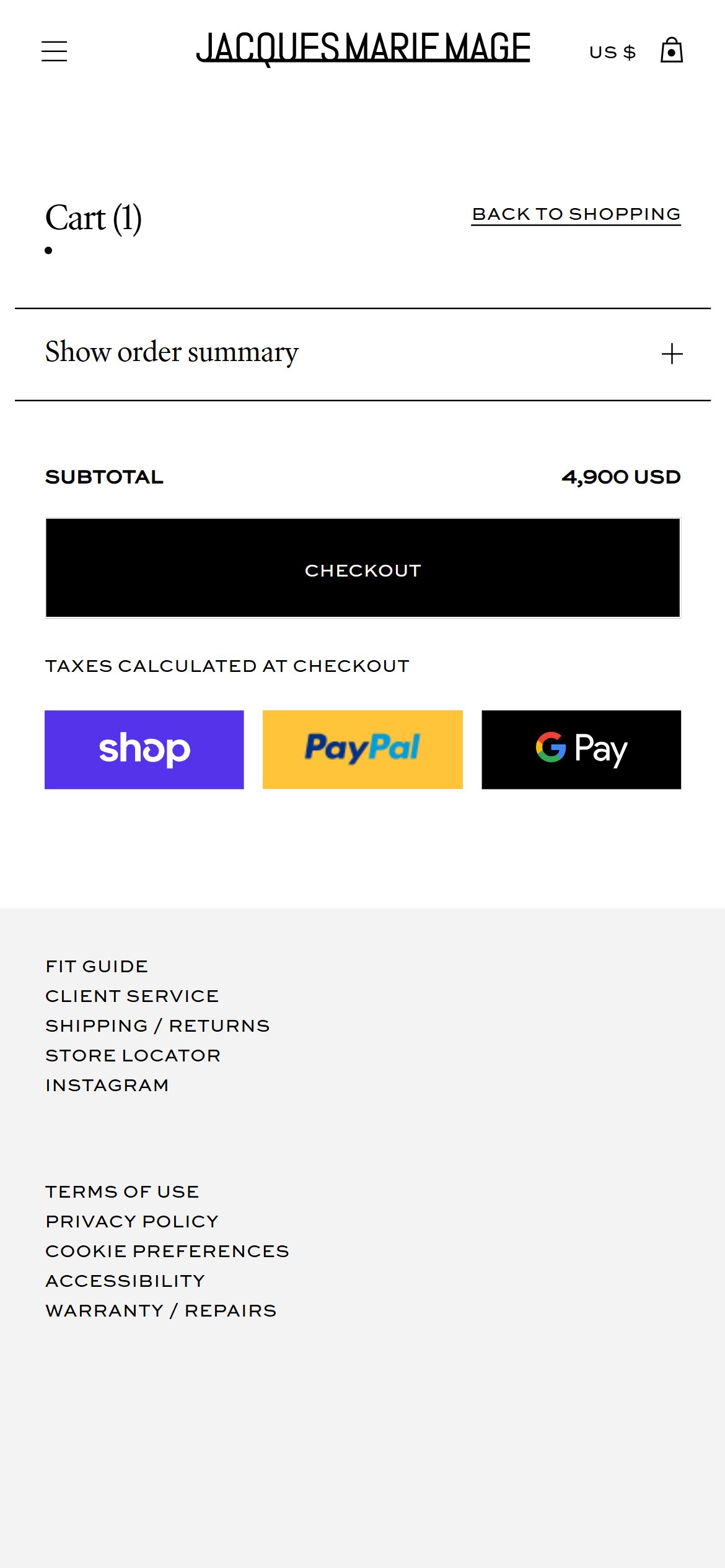
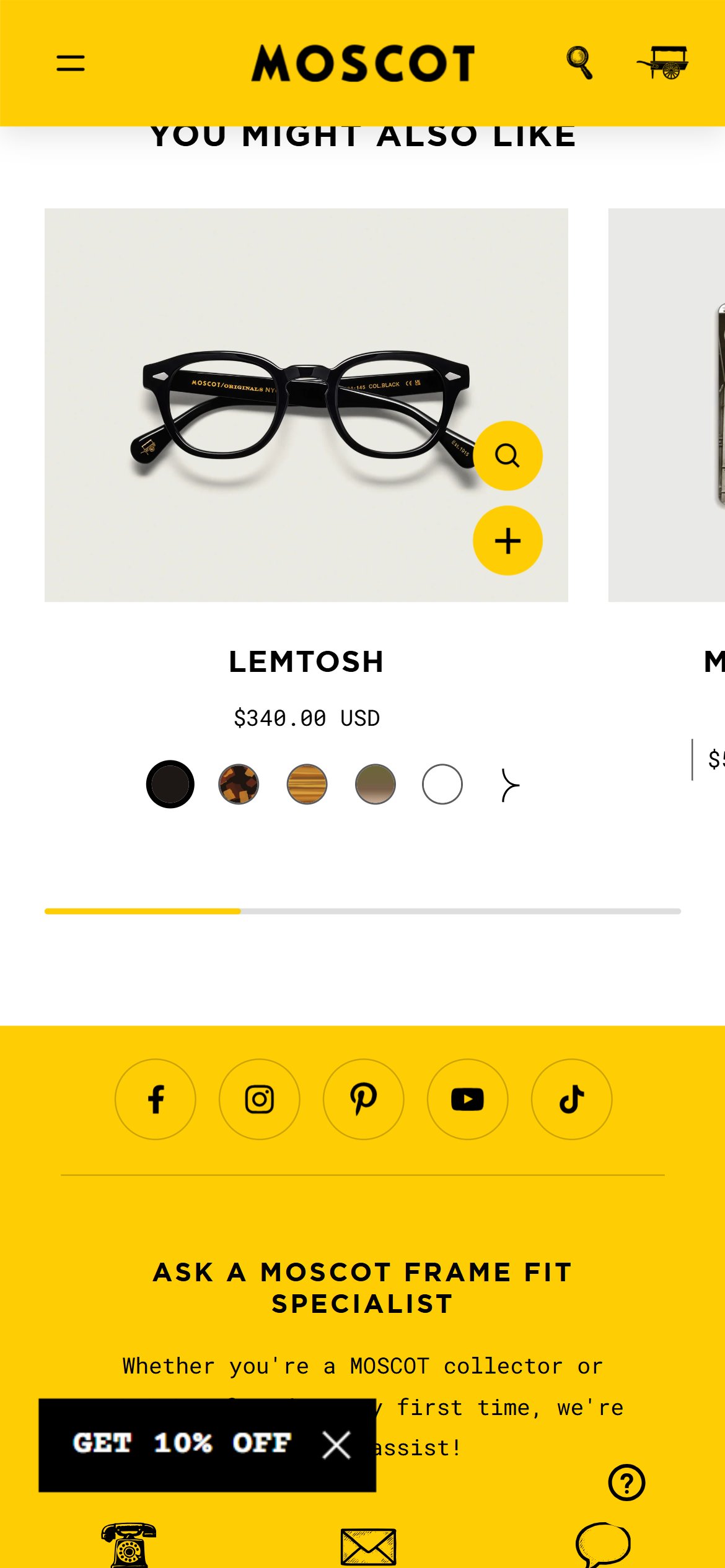
- The cart page displays only the order subtotal and checkout button — no 'You might also like', 'Complete the look', or accessory recommendations appear after adding a product.
- JMM sells a natural bundle: frames + cases + cleaning cloths + leather goods — these accessories are invisible in the cart, leaving AOV upside on the table.
- A shopper who has just committed to a $2,255 frame is the highest-intent visitor on the site — this is the optimal moment to surface a $195 leather case or a second colorway.
- 7/10 luxury fashion stores show at least one cross-sell module in the cart — the absence here is a direct AOV gap.
- Add a 'Complete Your Collection' horizontal scroll strip in the cart showing 3–4 complementary products: a lens cleaning cloth, leather case, or jewelry piece that pairs with the frame.
- For multi-colorway frames, add a 'Also consider' module showing alternate colorways of the item in cart — 'Love the STERETT? See it in Smoke or Raven.'
- A/B test cross-sell placement: above vs. below the checkout button — for luxury brands, a non-intrusive recommendation strip below checkout typically converts without disrupting checkout intent.
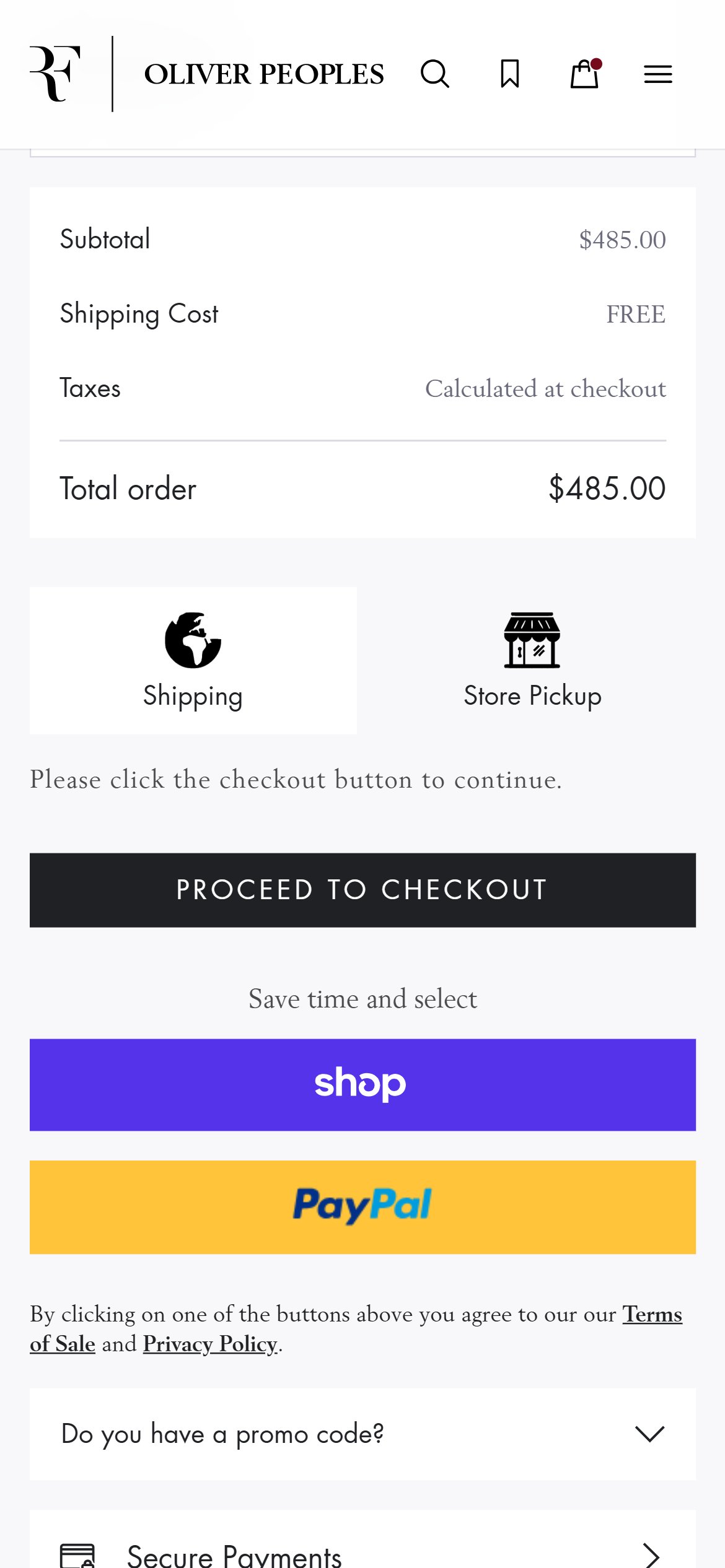
- The cart summary shows only 'SUBTOTAL: 4,900 USD' and 'TAXES CALCULATED AT CHECKOUT' — no shipping cost, no tax estimate, no total line before checkout.
- The 'Show order summary +' accordion in the cart contains the line item details but requires an extra tap — and when expanded, still shows no shipping or tax estimate.
- For a $4,900+ purchase, the gap between subtotal and actual total (after tax + any shipping) is a significant unknown that can create checkout hesitation or abandonment.
- Displaying a 'Shipping: Complimentary' or 'Shipping: Calculated at checkout' line alongside the subtotal sets accurate expectations before the buyer enters payment details.
- Expand the cart summary to show: Items (subtotal), Shipping (Complimentary or TBD), Estimated Tax (or TBD), Estimated Total — a standard 4-line summary that removes uncertainty.
- Display the item line with image, name, color, size, and price as the default expanded state rather than behind an accordion — for a 1-item cart, there is no reason to collapse it.
- Show 'You are saving $X by purchasing online vs. gallery' if JMM's online pricing differs from gallery pricing — a direct purchase incentive visible before checkout.
App Ecosystem
What's installed vs what's missing from best-in-class Fashion stores
Present (14)
Missing (5)
App Stack Assessment
Jacques Marie Mage runs a sophisticated 14-app stack weighted toward international commerce, fraud, and lifecycle marketing — and uniquely includes an Auglio virtual try-on that most competitors lack. The clearest opportunities are conversion-stage: no reviews/social-proof app is installed, sold-out demand isn't captured, and the cart has no cross-sell. The analytics layer (5 GA4 IDs, two session-recording tools) would also benefit from consolidation.
Confidential — Prepared for Jacques Marie Mage by Growisto | June 2026